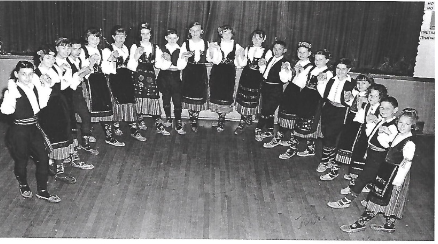
Toronto’s Multicultural Festival Caravan was established in 1968 by Leon and Zena Kossar as a nine day event to celebrate the cultural diversity of the city. Saint Sava Church took part in this event and named the parish hall the Oplenac Pavilion for this occasion. The Saint Sava Junior Folklore Group became inactive in the early 70s and a new dance group, Oplenac was formed in 1974. These early days were inspired by a strong desire to create a community for future generations, where they could preserve faith, language, culture and traditions. Everyone volunteered their time and mothers sewed folklore costumes
themselves to support the dance group.
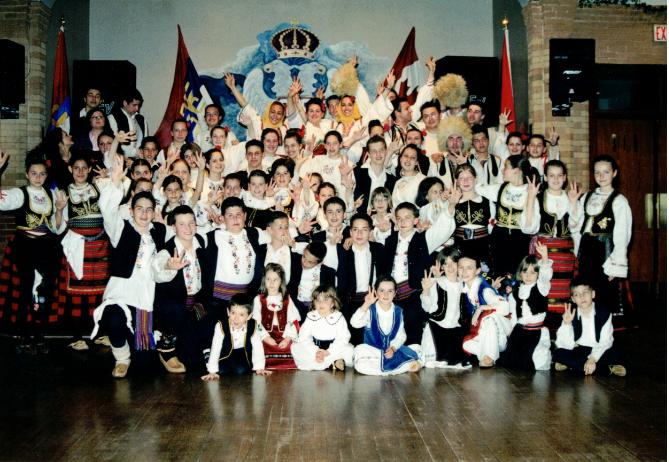
Caravan participation presented a key vehicle in showcasing an enormous Serbian folklore heritage to the Canadian public. The dance performances evolved from a simple peasant dance to the level of pure art in today’s performing spectacles. With the arrival of several new choreographers from Serbia in the 1990s, new colourful and diversified choreographies were introduced to the Serbian-Canadian scene. Most of the new dance instructors brought with them a wealth of knowledge acquired by performing with prestigious folklore associations in Serbia. The respected and only professional National Ensemble KOLO from Belgrade produced exceptional dancers who later became dance instructors and choreographers.
As the Serbian population in the GTA grew, so did their needs for more space and a larger church. The Church Congregation Sveti Sava had an opportunity and purchased a property at Dundas and Dixie Road in Mississauga on June 3, 1983. Renovation of the government building that would become the Serbian Centre in Mississauga was completed in 1984. The Serbian Centre in Mississauga became a cultural and networking hub for all Serbs including newcomers from the 1990s. It also became a new home for the Oplenac Folklore Group where its membership tripled in size. Folk dancing was a vehicle for cultural education, social activity, where children could grow in a safe environment and learn about their faith, traditions and Serbian identity. The monumental All Serbian Saints Serbian Orthodox Church was built and consecrated in June 2002 and represents a landmark in Mississauga for its beauty and style.
The Oplenac Folklore Ensemble continued to nurture a collective Serbian identity through their performances. They performed at Expo in 1986 in Vancouver, the Consecration of our parish’s All Serbian Saints Serbian Orthodox Church in June 2002, travelled to Serbia several times and hosted many folk-fest events, including the annual fundraising lunch for the Saint Petka Monastery near Paraćin, Serbia, where elderly nuns are taking care of 80 adult disabled individuals. Oplenac was a joy to watch perform at the 2002 consecration of our church, a 3 day event, when our dancers spent countless hours preparing for this once-in-a-lifetime event. Also, our group took up the organization of the annual multicultural weekend celebration called Carassauga and has won many prestigious awards including several for the best display room of our Serbian culture and traditions.
Initiative to change the Oplenac folklore group’s name was proposed in 2017. The reason was to avoid confusion between the two groups with the same name in the same town. It was decided to keep the Oplenac part and add its original name of Saint Sava. This is why today’s group name is Saint Sava Oplenac Folklore Ensemble.
Saint Sava Oplenac Folklore Ensemble has gone through several reorganizations during its existence, but has managed to progress and folk-dancing became the most popular activity thanks to the support of our children, parents and community. The Serbian Orthodox church has played a significant role in the development of the organization. While other dance groups were branching away from the church, Sveti Sava Oplenac has stayed strongly connected. Cultural growth and preservation of the community as a whole would be impossible without the church.